
Nautílus
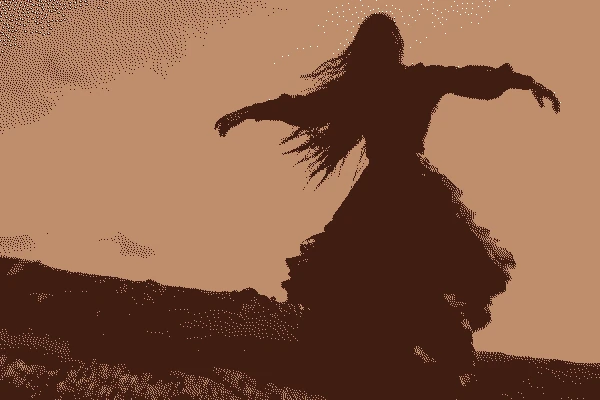
Writing the music for this Ordem do Ó dance piece — brought to life by Mara Morgado, choreographer and dancer — came during a turbulent stretch, but, as the Greeks would say, a Kairos of my life.
That's because being so closely tied to a show that explores what it means to be a woman, the feminine, in all its struggles and triumphs, its history and its relationship with memory, means a great deal to me. Partly for being the grandson, son, brother, partner and friend of incredibly strong, inspiring women — and partly because my daughter was born close to this show's premiere.
It was with a sense of what life would hold for her, alongside what Mara shared with me about the creative process, that I decided to take this project on.
The music went to a lot of different places over the course of this soundscape. Not having the time to give myself over fully to composing pushed me into artistic decisions outside my comfort zone, in the name of saving time or working more efficiently. Looking back, I think that pushed me into sonic territory I don't usually occupy.
At the same time, the weight of the theme and the show's length got me thinking about the power of repetition, and of iterating on the same musical material — pushing it, at times, "down to the bone."
Etéreo
A textural, climactic piece — the show's ending — deliberately static, to make room for the brilliant Sara Belo's live voice, whose lyrical improvisations added a layer of complexity and emotion that transformed the music entirely. This recording is only the instrumental part, since what Sara does live is improvised in the moment.
Fusão Vida-Morte
Here I got to explore something I return to now and then: field recordings of old Portuguese traditional music. Where I could, I also worked in women's choral singing, to keep a thread of femininity running through the piece. At several points in this dance work I tried to bring in a bit of "disco" energy, since the script itself already leaned toward something festive and danceable, while carrying an aura of strength and struggle.
Mnemosine
Someday I'll get myself a real dulcimer, so I'm not limited to digital instruments alone. Still, I felt the improvisations I recorded for this piece suit the territory I wanted to explore well — memory, and what is telluric and submerged. As in other compositions, I used tape recording and re-digitisation to colour the sound. As Brian Eno foresaw, I find the imperfections of magnetic tape fascinating, while the purity of the purely digital leaves me cold.